
We recently explored the surprising origin of why the “T-shirt” got its name, but there is another staple in your wardrobe hiding an even bigger identity crisis.
Look in your closet. You almost certainly own a collared, short-sleeve shirt with a few buttons at the neck. We all call it a Polo shirt.
But here is the historical plot twist: The Polo shirt was not invented for the sport of polo. It was invented for tennis.
So, how did a tennis shirt get hijacked by a completely different sport? The story involves a French tennis legend, a rigid dress code, and a brilliant marketing move that changed fashion forever.
The Uncomfortable Era of “Tennis Whites”
To understand the invention of the polo shirt, you have to look at the absurd way athletes dressed in the early 1900s.
If you played tennis in the 1920s, you were expected to wear “tennis whites.” But this wasn’t the breathable athletic wear of today. Tennis players wore long-sleeved, button-down woven dress shirts (often with the sleeves rolled up), flannel trousers, and—believe it or not—a tie.
It was stiff, hot, heavy, and incredibly restrictive.
Enter “The Crocodile”: René Lacoste
French tennis champion René Lacoste was tired of sweating in a restrictive dress shirt. He realized that to dominate on the court, he needed a garment that actually moved with his body.
In 1926, Lacoste designed his own custom shirt and wore it to the U.S. Open. It was revolutionary for three reasons:
Short Sleeves: It freed up the arms for a better swing.
The Collar: It was soft, unstarched, and could be popped up to protect the neck from the sun.
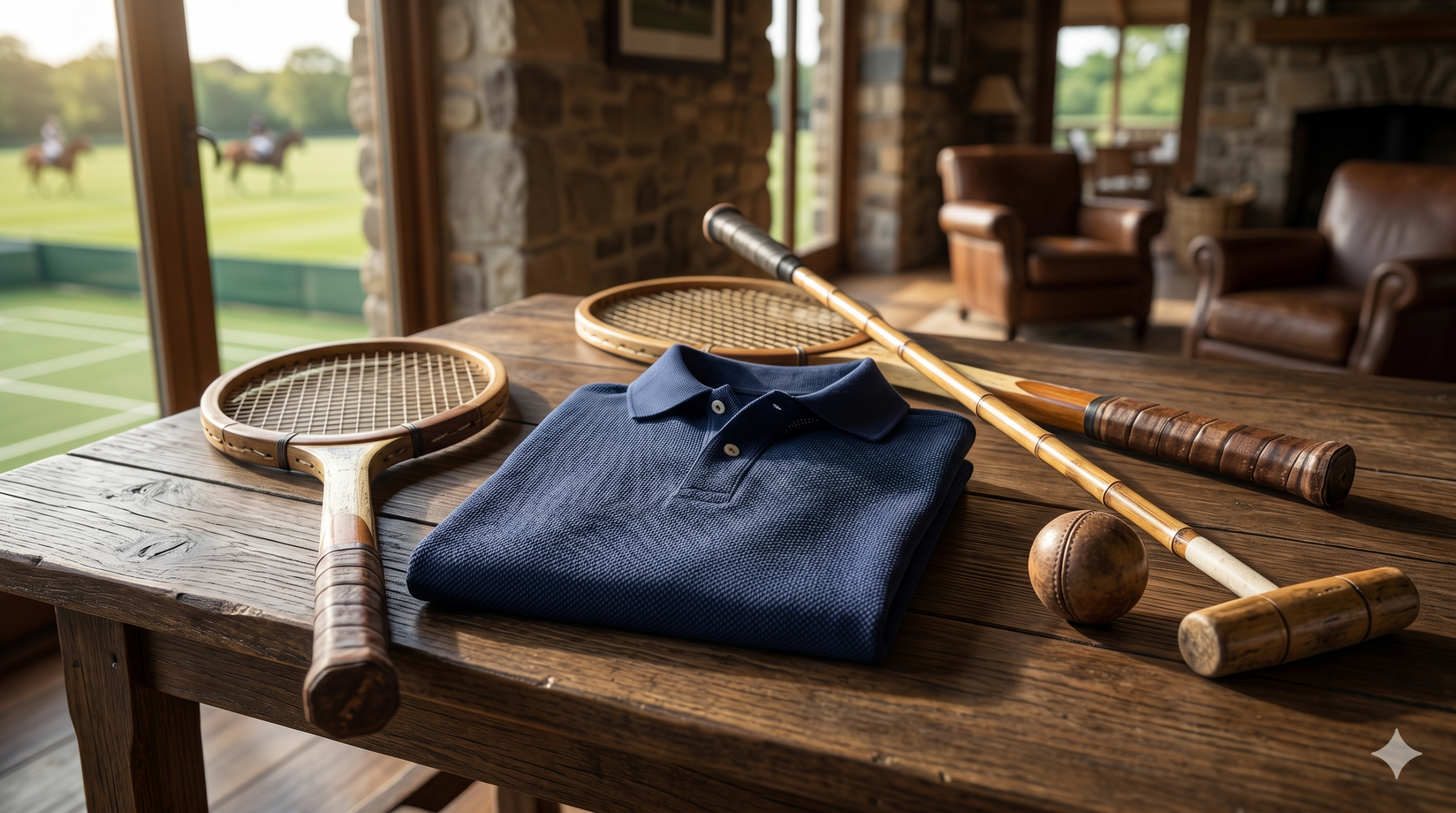
The Fabric: Instead of rigid woven cotton, Lacoste used a loosely knit, breathable fabric called petit piqué cotton.
Lacoste’s nickname on the court was “The Crocodile,” so he embroidered a small crocodile logo on the chest. He won the championship, and the modern athletic shirt was born.
But wait… if Lacoste invented it for tennis, where does the word “Polo” come in?
The Polo Hijack
While Lacoste was changing tennis, players of the equestrian sport of Polo were dealing with their own clothing crisis. Traditional polo players wore thick, long-sleeved shirts made of Oxford cotton. The collars flapped in the wind and hit them in the face as they rode their horses.
When polo players saw René Lacoste’s breathable, short-sleeved, soft-collared tennis shirt, they immediately realized it was perfect for riding.
By the 1930s, polo players globally had abandoned their old uniforms and adopted Lacoste’s tennis shirt. In 1936, a haberdasher and polo player named Lewis Lacey began producing these shirts with an embroidered polo player on the chest.
Ralph Lauren Seals the Deal
The final nail in the “tennis shirt” coffin came in 1972. An up-and-coming American designer named Ralph Laurenlaunched a new casual wear brand. He wanted a name that sounded wealthy, athletic, and sophisticated. He named his brand “Polo.”
Lauren released his own version of the piqué cotton shirt in 24 vibrant colors, calling it the “Polo Shirt.” The marketing was so successful, and the shirt became such a massive global hit, that the name became the universal term for the garment.
René Lacoste invented it, but Ralph Lauren named it.
The Anatomy of the Modern Polo (A Manufacturer’s View)
Today, the polo shirt is the ultimate bridge between casual and formal. But what actually makes a great polo shirt today?
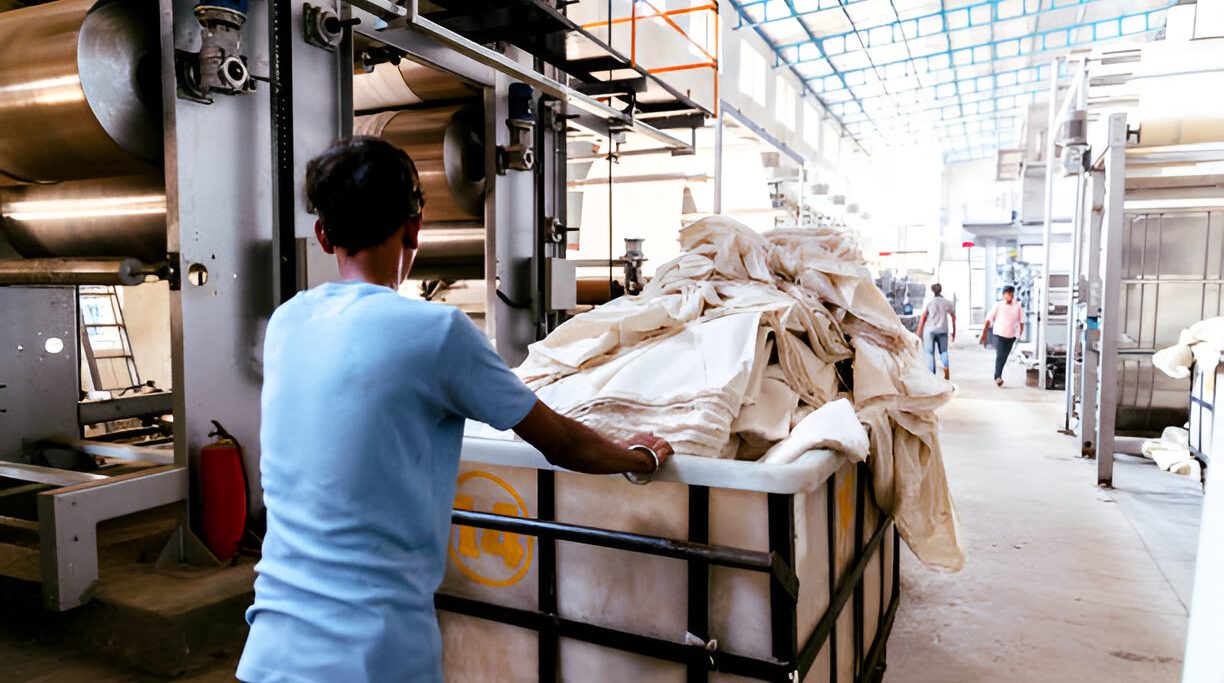
At Cotton Monk, we manufacture thousands of premium polos, and the secret always comes back to Lacoste’s original vision: The Knit.
Unlike a T-shirt (which is usually made of a smooth Single Jersey knit), the classic Polo is made from a Piqué knit.
Breathability: The piqué knit creates a subtle, waffle-like geometric texture that allows air to flow through the fabric.
Structure: It is slightly heavier than a standard T-shirt, allowing the collar to hold its shape without feeling stiff.
Durability: The textured weave hides sweat well and resists wear and tear, making it perfect for both the golf course and the boardroom.
From Court to Closet
The next time you pull on a polo shirt, you can appreciate its chaotic history. You are wearing a garment invented by a French tennis player, stolen by British polo riders, and made famous by an American fashion designer.
Looking to create your own line of premium, custom-manufactured Polo shirts? At Cotton Monk, we combine the heritage of the classic piqué knit with modern, sustainable manufacturing right here in Tirupur. Contact us today to bring your concept to life.