
Big Machines, Better Fabric: Why Scale Defines Quality in Clothing Manufacturing
The Industrial Secret: Why “A Little Bit of Custom Fabric” Breaks the Laws of Physics
We live in an era of hyper-customization. Modern brands want unique blends, specific Pantone shades, and limited-run textures to set themselves apart. It sounds simple to request just a few hundred meters of something special. Yet, when these requests hit the reality of industrial textile creation, they collide head-on with immutable laws of mechanics and chemistry.
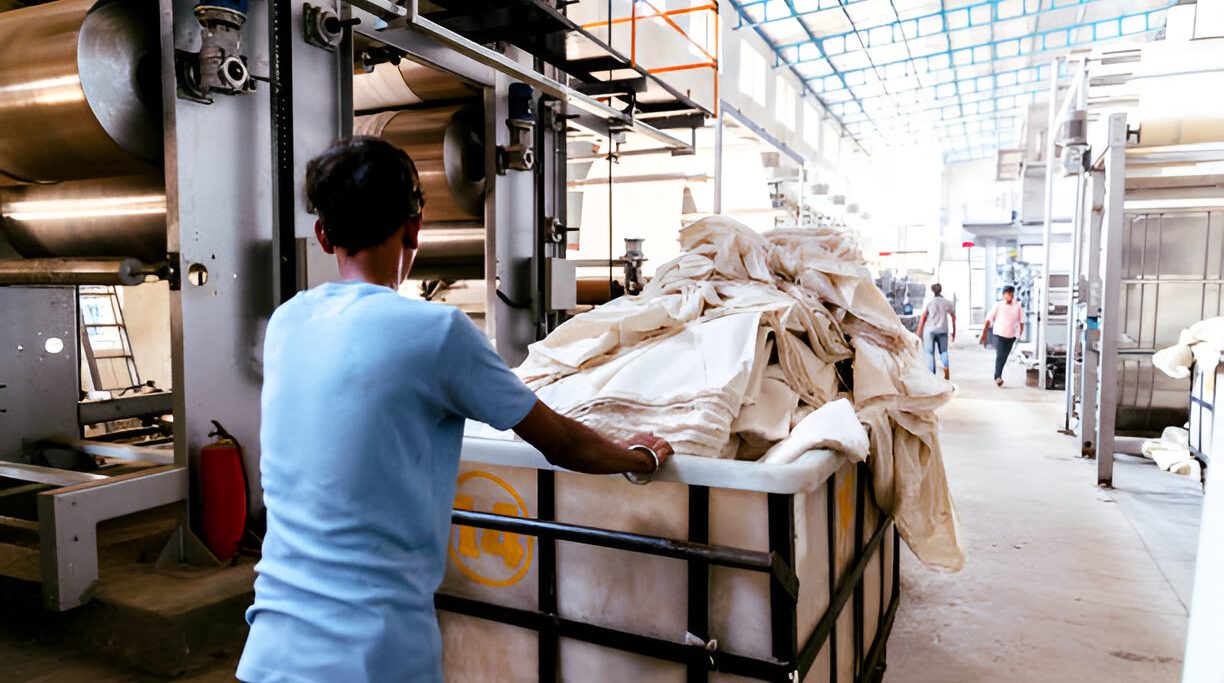
Making textiles isn’t an artisanal craft that just happens to be big; it is a massive, momentum-based juggernaut. At Cotton Monk, our 40-year legacy has taught us that the entire ecosystem is optimized for flow, speed, and mass. Trying to slow this colossal machinery down for a small run isn’t just expensive—it is a fight against the physical design of the industrial world.
Here is the engineering reality behind clothing manufacturing MOQs and why scaling down is often harder than scaling up.
1. Why Custom Fabric is Physically Impossible Under 1,000kg
Let’s start where the fabric begins: the yarn. Industrial spinning frames are massive beasts designed for serious momentum. They are engineered to process hundreds of kilograms simultaneously to maintain consistent tension across the fiber blend.
When you attempt to feed these machines a mere 50kg, the physics fails. The machine spends more time shuddering to a start and grinding to a halt than actually producing. This results in “unstable yarn”—fibers that lack structural integrity because they never achieved continuous run-speed. A high-quality custom blend isn’t just a choice; it is a mechanical reward for operating at scale.
2. 4 Hours of Setup for 30 Minutes of Motion
Once you have the yarn, knitting it into fabric presents its own hurdle. A circular knitting machine is a complex web of thousands of needles working in concert. Changing a fabric construction requires a painstaking manual recalibration of every single needle and sinker.
This manual engineering takes roughly four hours for a skilled technician. If the batch is too small, the machine sits idle for 90% of the shift just to run for 30 minutes. From a production standpoint, this is a system failure that compromises the focus required for top-tier quality.
3. Chemistry Doesn’t Scale Down
Industrial dyeing isn’t just dipping cloth into ink. It is a chemical process dependent on Liquor Ratios—the precise balance of water volume to fabric weight.
Putting 50kg of fabric into a high-pressure jet designed for 500kg is like washing a single sock in an industrial laundromat. The mechanical agitation fails because there isn’t enough mass, leading to uneven saturation, “chafe marks,” and structural damage to the fibers. You simply cannot argue with the physics of a dye tank’s size.
4. The 5,000-Thread Barrier in Weaving
Before a loom moves an inch, it requires a “warp” setup where roughly 5,000 individual threads must be hand-threaded through the loom’s “eyes.” This laborious process is the prerequisite for turning the machine on. Stopping a loom after only a few meters is analogous to firing up a 747 jet engine just to taxi ten feet—the mechanical effort makes the short output illogical.
5. The Geometry of Waste
In the cutting room, efficiency is a game of “Tetris.” We stack a hundred-plus layers of fabric and use digital CAD layouts to nest sizes (S, M, L, XL) together. With low quantities, you lack the variety of shapes to fill the gaps. Geometry dictates that fabric wastage skyrockets, turning expensive textiles into piles of unusable scrap.
6. Muscle Memory and “Cruising Speed”
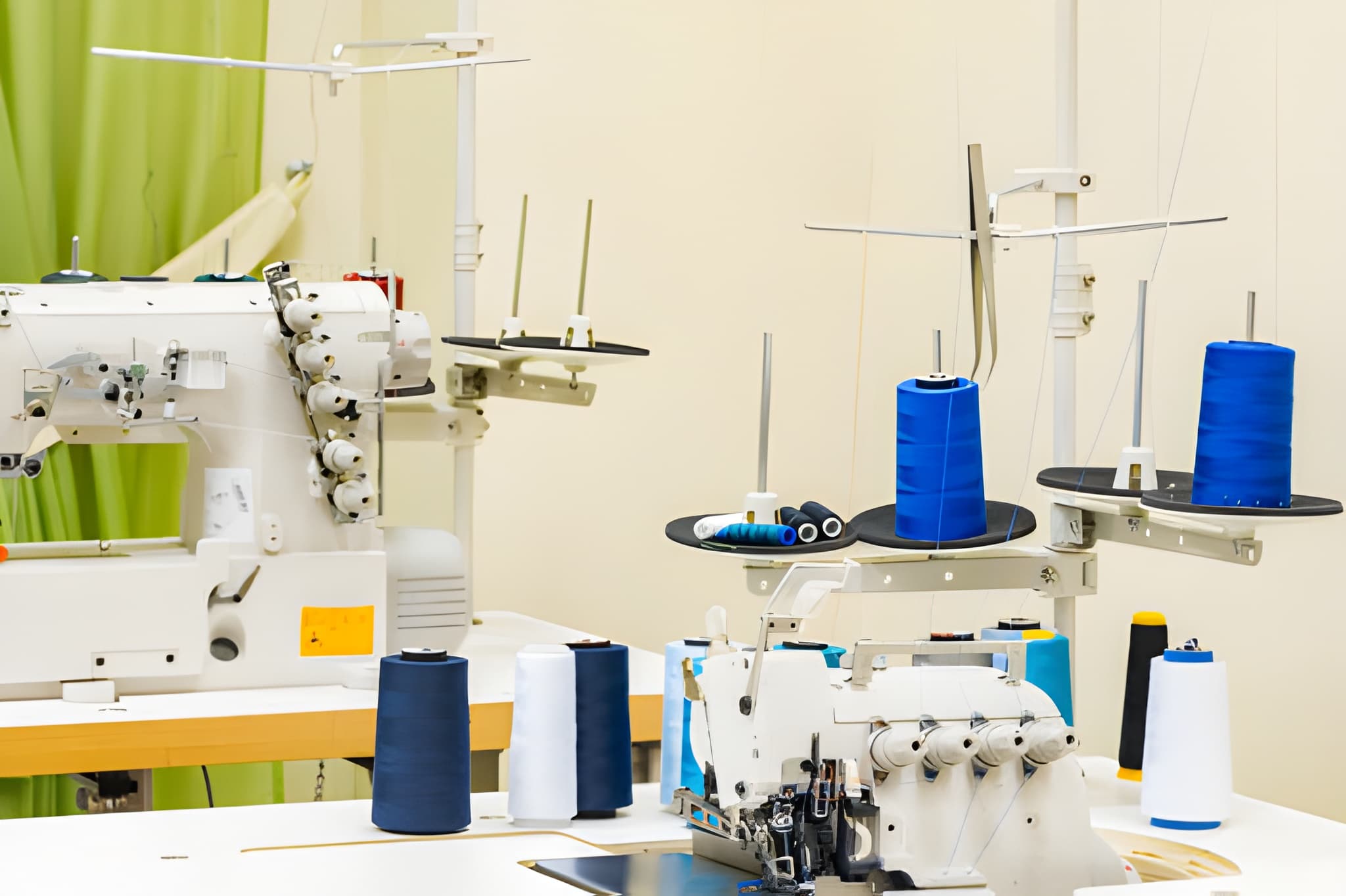
The human element is equally reliant on volume. Industrial sewing is built on Muscle Memory. It takes a skilled operator roughly 100 to 200 units to get into the rhythm where seams are perfectly consistent. On a small order, the run is finished before the operator’s hands have even learned the curves of the garment.
7. Fixed Costs: From Chemists to Zippers
-
The Chemist’s Time: Developing a specific Pantone shade is a scientific R&D process. Matching a color perfectly takes the same effort for 5 meters as it does for 5,000.
-
Hardware Bottlenecks: Custom zippers and branded buttons are made on high-speed injection molds. These machines cannot cycle correctly with a low volume of raw material in the hopper.
-
Logistics: The administrative energy for customs filings and port handling is a static requirement. Processing a single carton takes the same human hours as a 40-foot container.
Respecting the Rhythm of the Factory Floor
Ultimately, the friction between a creative vision and a finished product isn’t a lack of willingness—it’s a matter of physics. Industrial manufacturing is a river designed to move in one direction at a specific velocity.
At Cotton Monk, we believe true luxury and consistency in textiles aren’t born from skipping the rules of scale, but from mastering them. When a production line reaches its “cruising speed,” the results are harmonious: colors are deep, stitches are flawless, and waste is minimized.
Ready to scale your brand with a partner who understands the science of manufacturing? Contact Cotton Monk today.