
When you look at a luxury hoodie or a high-performance polo, the embroidered logo often steals the show. It looks crisp, three-dimensional, and premium. But if you’ve ever seen a logo that looks puckered, messy, or distorted after a few washes, the machine isn’t usually to blame.
The culprit is the punching.
In the world of apparel manufacturing, “punching” (more commonly known today as digitizing) is the most critical step you’ve probably never heard of. It is the digital blueprint that tells the needle exactly where to go. At Cotton Monk, we believe that understanding this process is the key to sourcing better garments for your brand.
Here is everything you need to know about the science of embroidery punching.
What Exactly is “Punching” in Embroidery?
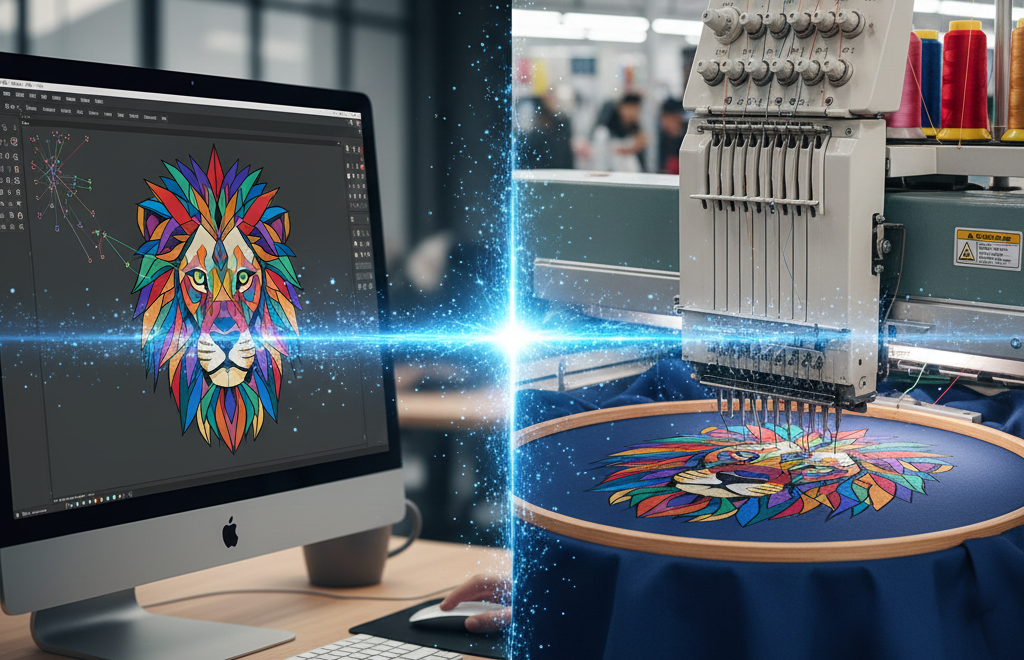
Punching is the process of converting a graphic design (like a .JPEG or .AI logo) into a machine-readable stitch file (usually a .DST or .PES file).
Historically, this was done by physically “punching” holes into paper tapes that fed into mechanical embroidery looms. Today, it is done using advanced software, but the term “punching” stuck.
Think of it like an architect’s blueprint. The embroidery machine is the builder, but the “puncher” (the digitizer) is the architect. If the blueprint is bad, the building will collapse—no matter how good the builder is.
The Science Behind the Stitch: How It Works
A common misconception is that you can just “scan” an image and the machine stitches it. In reality, a skilled digitizer must manually plot thousands of stitches, making complex engineering decisions for every millimeter of the design.
Here are the three technical pillars that make or break your design:
1. Underlay: The Hidden Foundation
Before the visible colors are stitched, the machine sews a hidden layer called the underlay.
- What it does: It attaches the fabric to the backing (stabilizer) to prevent shifting.
- Why it matters: Without proper underlay, stitches sink into the fabric (especially on fleece or pique cotton), making the logo look “flat” or patchy.
2. Pull Compensation
Thread has tension. When a machine runs at 1,000 stitches per minute, the thread pulls the fabric inward.
- The Fix: A skilled puncher intentionally “distorts” the digital file—making it slightly wider—so that when the thread pulls tight, it shrinks back to the perfect intended shape.
- The Result: Perfect circles that stay circular, rather than turning into ovals.
3. Stitch Density & Direction
- Density: If stitches are too close together, they can cut a hole in the fabric. If they are too far apart, the fabric shows through.
- Direction: The angle of the stitch changes how light reflects off the thread. By manipulating angles, we can create texture, depth, and a 3D effect without using extra materials.
Why Bad Punching Costs Brands Money
For fashion brands, poor punching is a silent profit killer. Here is what happens when the digitizing isn’t optimized for the specific fabric:
- Puckering: If the stitch density is too high for a lightweight t-shirt, the fabric will bunch up around the logo, creating permanent wrinkles.
- Birdnesting: Poorly plotted paths cause thread to bunch up under the fabric, leading to machine jams and production delays.
- Poor Wash Durability: If the underlay is weak, the embroidery will lose its shape and unravel after 5-10 washes, damaging your brand’s reputation for quality.
The Cotton Monk Difference: Fabric-First Digitizing
At Cotton Monk, we don’t believe in “one-size-fits-all” files. A logo punched for a denim jacket will never work on a performance polyester tee. The fabric physics are completely different.
We treat punching as a vital part of our Quality Assurance (QA) process:
- Fabric Analysis: We adjust stitch density based on the GSM (weight) and stretch of your specific fabric.
- Sampling: We run a physical sample of every punched file before mass production begins.
- Optimization: We tweak the “pull compensation” to ensure your logo stays sharp, legible, and durable—whether you order 500 pieces or 50,000.
Conclusion
Great embroidery is 20% machine and 80% preparation. The “punching” process is where art meets engineering, ensuring that your brand’s logo looks as premium on the finished garment as it does on your computer screen.
Don’t settle for “good enough” embroidery. Partner with a manufacturer that understands the science behind every stitch.