
In the world of garment manufacturing, there is a common friction point between brand owners and factory floors: the transition from a single prototype to a 5,000-unit bulk run. To a designer, a sample is a creative milestone. To a manufacturer, it is a technical blueprint.
When these two perspectives don’t align, quality suffers, timelines slip, and costs escalate. At Cottonmonk, we believe that the most successful fashion brands are those that understand the “physics of the floor.”
Here are the five most common misconceptions about sampling versus bulk production that every brand owner needs to know to ensure a flawless collection.
1. Misconception: “A sample is just one garment; it shouldn’t affect the bulk.”
The Technical Reality: A production line is a synchronized ecosystem, not a collection of independent tailors.
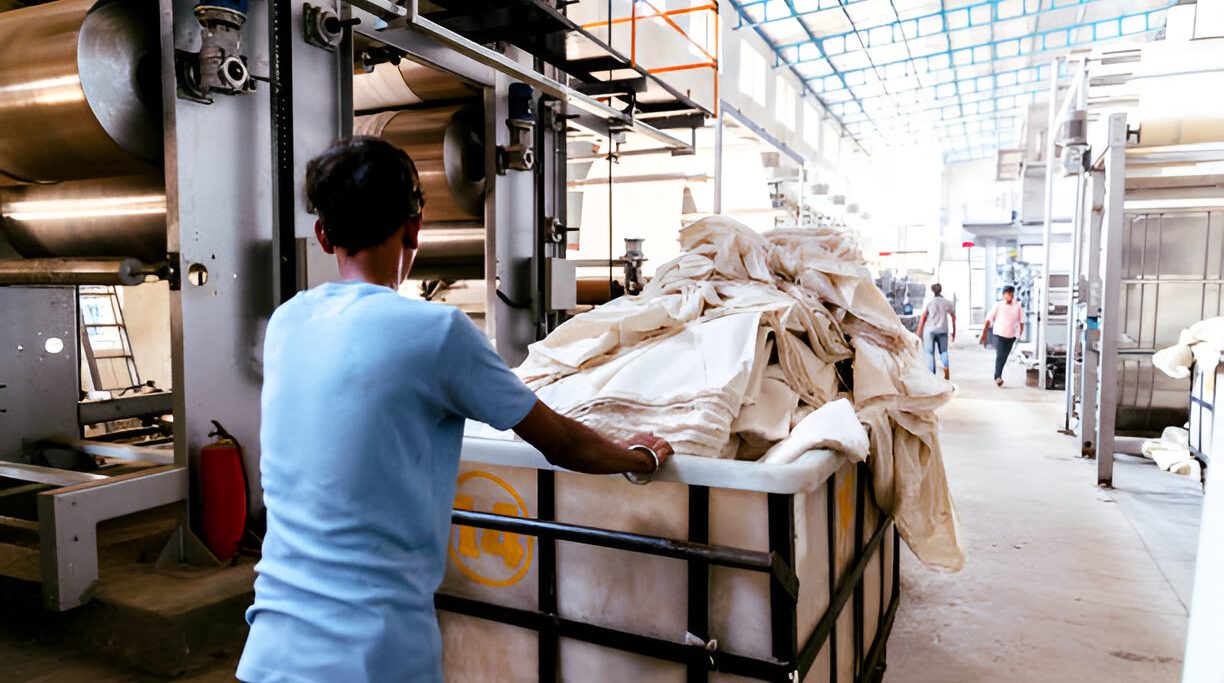
When a factory line is running a bulk order, every machine is calibrated for a specific “flow.” This includes thread tension, stitch density, and even the physical pace of the operators.
Pulling a lead technician off a live production line to create a “quick” prototype for a different design creates a “Momentum Tax.” It breaks the rhythm of the entire floor. In lean manufacturing, we know that when a synchronized line is interrupted, the error rate on the bulk order temporarily spikes as the team struggles to regain their collective pace.
2. Misconception: “The same machines do everything.”
The Technical Reality: Production machines and Development machines serve different masters.
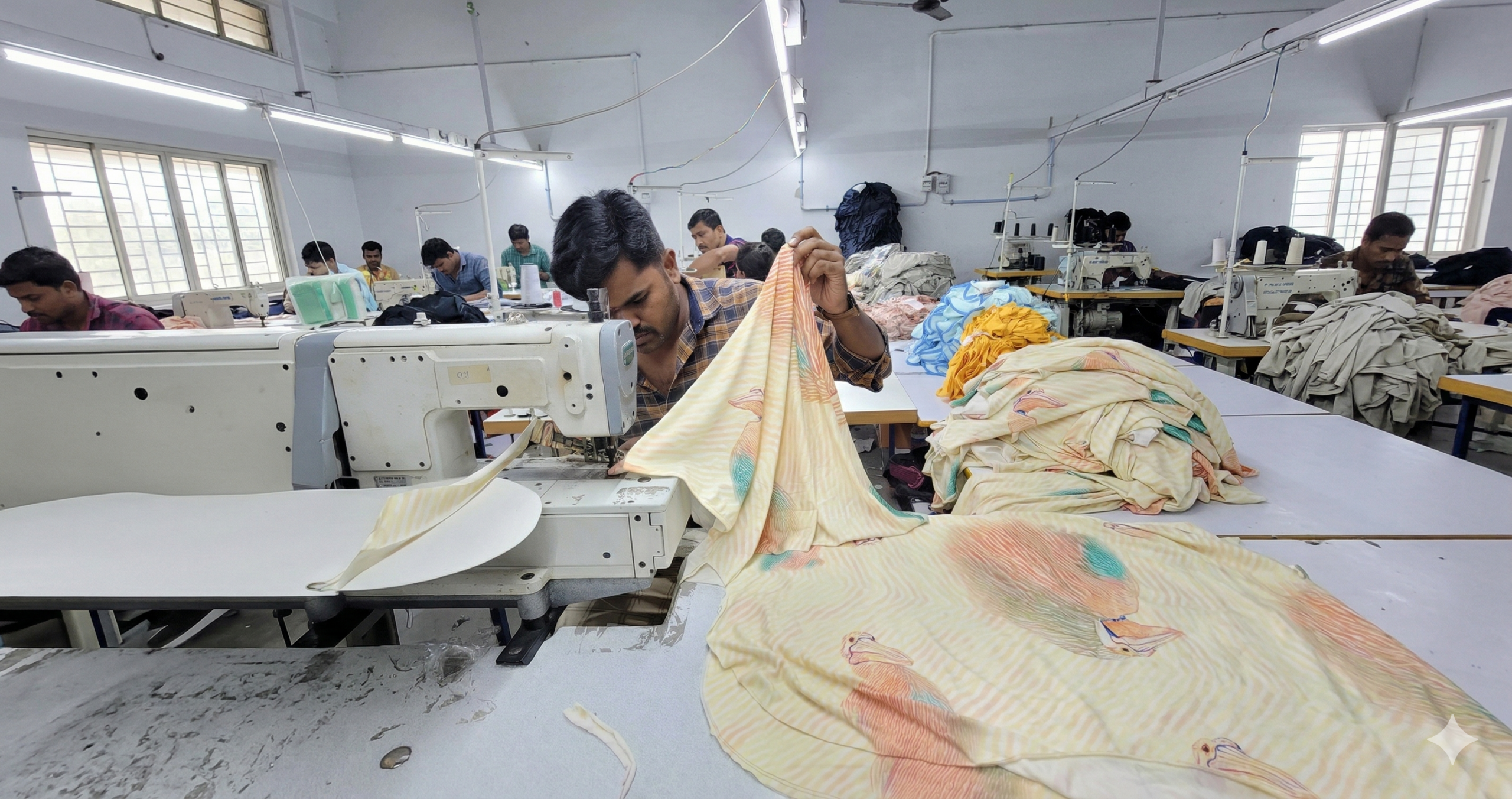
Bulk Production Machines: These are athletes of efficiency. They are locked into high-speed settings to ensure every one of your 5,000 units is identical.
Sample Room Machines: These are tools of engineering. They are frequently adjusted, tested, and re-tuned to figure out how a new design should be built.
If a factory tries to “squeeze in” a sample on a production-ready machine, they must break the tension settings. It is mathematically difficult to return a machine to the exact same “sweet spot” mid-production, which is why some brands notice slight stitching variations between different batches of the same order.
3. Misconception: “Sample quality is the only indicator of bulk quality.”
The Technical Reality: A “Gold Sample” proves the design; a “PP Sample” proves the process.
Many brands make the mistake of approving a sample made by a master tailor in a quiet studio and assuming the bulk will look identical. However, the most critical step is the Pre-Production (PP) Sample.
The PP sample must be made using the actual bulk fabric and the actual production machinery. This proves that the design can survive the “stress” of high-speed manufacturing. Without this bridge, you are essentially gambling on the first 500 units of your order.
4. Misconception: “Mid-production changes are just ‘minor tweaks’.”
The Technical Reality: In bulk manufacturing, there is no such thing as a minor tweak.
Once the fabric is cut and the machines are calibrated, a “small change” (like moving a label or changing a stitch type) creates a “Butterfly Effect.”
Thread Consumption: A change in stitch density can increase thread usage by 15%, affecting your margins.
Seam Strength: Changing a stitch type mid-run can compromise the structural integrity of the garment if the tension isn’t perfectly re-matched.
Waste: Even a 1/2-inch adjustment may render pre-cut fabric panels unusable, leading to significant material waste.
5. Misconception: “Fast samples are a sign of a high-capacity factory.”
The Technical Reality: Speed in sampling often hides a lack of discipline in production.
A factory that prioritizes immediate sample turnaround at the expense of their live production floor is a factory that is not protecting its clients’ quality.
The gold standard in modern manufacturing is a Dedicated Development Room. By isolating the sampling process from the bulk floor, a factory can provide agility for new designs while maintaining a “Hard Lock” on bulk quality. This separation of powers is what ensures that your 1st unit and your 5,000th unit are indistinguishable.
Protecting Your Quality: The Cottonmonk Checklist
To ensure your brand avoids these common pitfalls, follow these three manufacturing rules:
Lock the Tech Pack: Finalize all technical details before the bulk production clock starts.
Request a Pilot Run: For large orders, ask for a small “size set” run to catch calibration issues early.
Value the ‘No’: If your manufacturer tells you a mid-run change is risky, they aren’t being difficult—they are protecting your brand’s reputation.
At Cottonmonk, we invest in specialized Development Rooms to ensure your creative vision never compromises your production quality. Ready to scale your brand with a partner who understands the details?