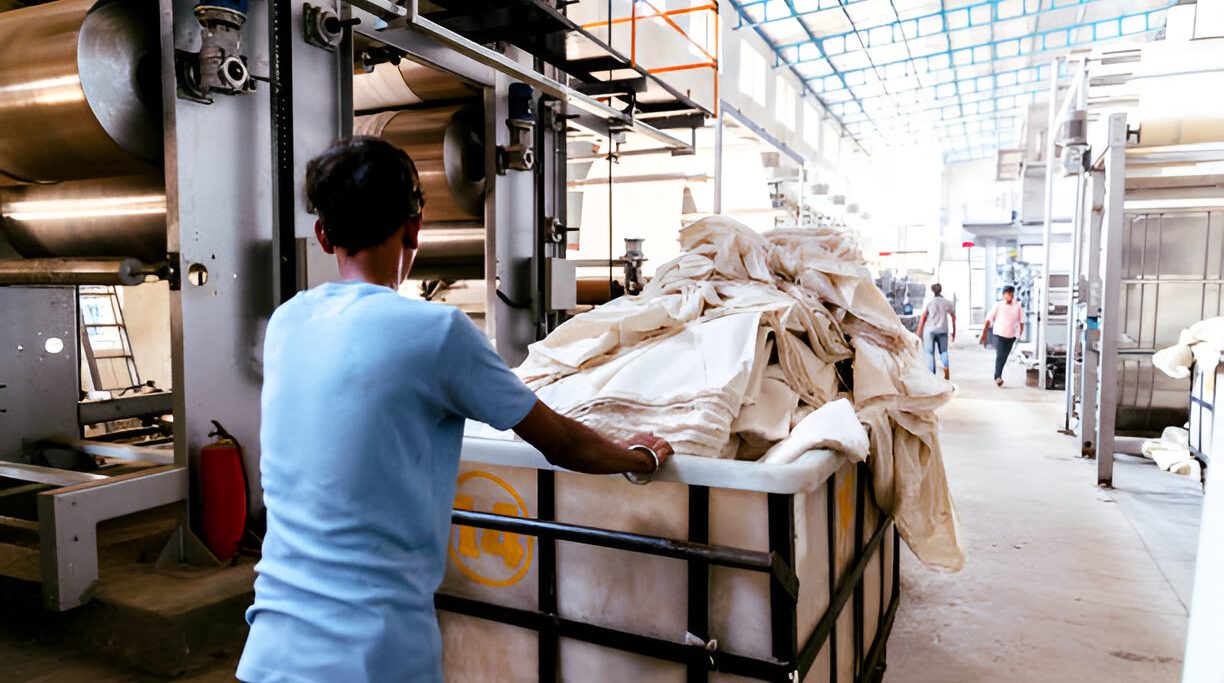

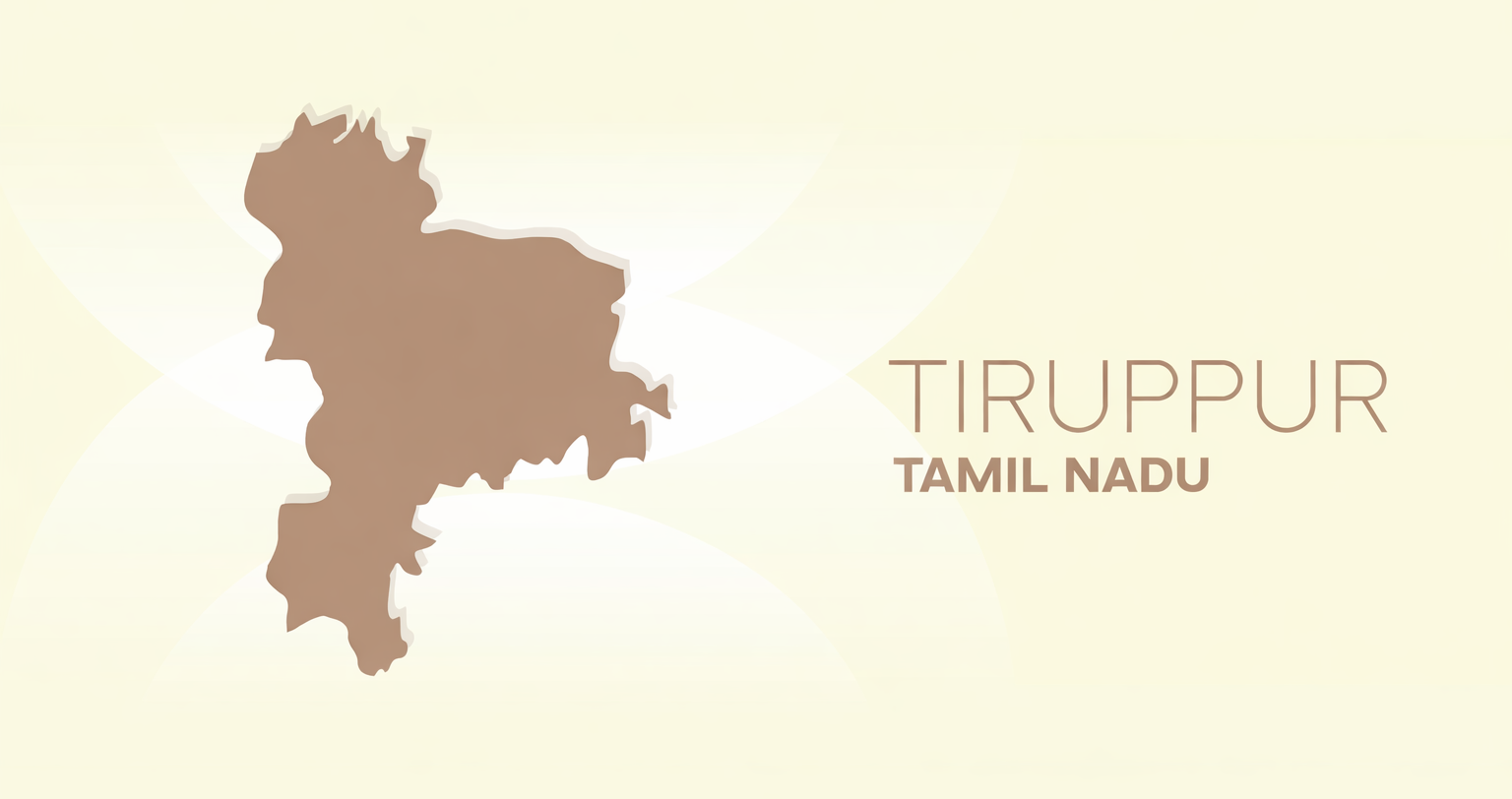
In the heart of Tamil Nadu lies a city that never sleeps. Known globally as the “Knitwear Capital of India,” Tiruppur is more than just a manufacturing hub; it is a testament to grit, innovation, and a relentless spirit of entrepreneurship.
As we look at the landscape in 2026, Tiruppur accounts for nearly 55% of India’s total knitwear exports. But how did a small, dusty town transition from making basic undershirts to dressing the world’s elite brands? This is the story of Tiruppur’s textile evolution.
The Humble Origins: The “Banian” Era (1960s – 1970s)
The story began with a few hand-operated knitting machines. In the early 1960s, local entrepreneurs focused on the domestic market, producing the humble “banian” (cotton undershirt).
The secret weapon wasn’t technology—it was the water. The local Noyyal River water was uniquely suited for bleaching and dyeing, giving Tiruppur-made garments a brightness that competitors couldn’t match. This “white gold” reputation laid the foundation for what was to come.
The Global Pivot: The 1980s Export Explosion
The 1980s marked the “Big Bang” of Tiruppur’s evolution. European buyers, specifically from Italy and France, began looking for affordable yet high-quality alternatives to traditional manufacturing hubs.
-
1981: Tiruppur’s exports were valued at a modest ₹10 Crore.
-
The TEA Factor: The formation of the Tiruppur Exporters Association (TEA) in 1990 professionalized the cluster, allowing small-scale owners to bargain as a global collective.
By the late 90s, brands like Nike, Adidas, Gap, and H&M had “Made in Tiruppur” tags on their shelves.
The Crisis That Redefined an Industry: The Green Revolution
Every great story has a conflict. In 2011, the industry faced a massive existential threat. The Madras High Court ordered the closure of all dyeing units due to the pollution of the Noyyal River.
Instead of collapsing, Tiruppur evolved. It became the first textile cluster in the world to implement Zero Liquid Discharge (ZLD).
Key Fact: Today, Tiruppur recovers over 95% of the water used in dyeing processes, making it a global case study for sustainable manufacturing.
Tiruppur in 2026: The Tech-Enabled Titan
As of March 2026, the city is undergoing its third wave of evolution: Digital Transformation.
Why Tiruppur is Ranking Top in 2026:
-
The India-US Trade Framework: Recent trade agreements have made Tiruppur the primary alternative to Southeast Asian competitors.
-
AI-Driven Quality Control: Factories have moved beyond manual inspection. AI-powered cameras now detect fabric flaws in milliseconds.
-
The ESG Advantage: Buyers now demand Environmental, Social, and Governance (ESG) compliance. Tiruppur’s shift to wind and solar power for its spinning mills has made it the “Greenest Textile Hub” in Asia.
Timeline of Evolution: A Quick Glance
| Decade | Focus Area | Status |
| 1960s | Domestic Innerwear | “The Banian Town” |
| 1980s | International Exports | “The Export Hub” |
| 2010s | Environmental Sustainability | “The ZLD Pioneer” |
| 2026 | AI & Sustainable Fashion | “The Global Green Engine” |
The Spirit of the “Self-Made” Entrepreneur
What truly sets Tiruppur apart is its people. Unlike other industrial cities built by corporate giants, Tiruppur was built by former laborers. Almost every major exporter today started as a machine operator or a tailor. This “hands-on” DNA is why the city can adapt to a new fashion trend in 48 hours—a speed that even “Fast Fashion” giants struggle to match.
The Future is Circular
The evolution of Tiruppur is far from over. As we move further into 2026, the focus has shifted to Circular Fashion—recycling old garments back into high-quality yarn. From a dusty town to a multi-billion dollar sustainable powerhouse, Tiruppur remains the beating heart of India’s economic dream.