
Cotton, Constitution & the Spirit of 26 November
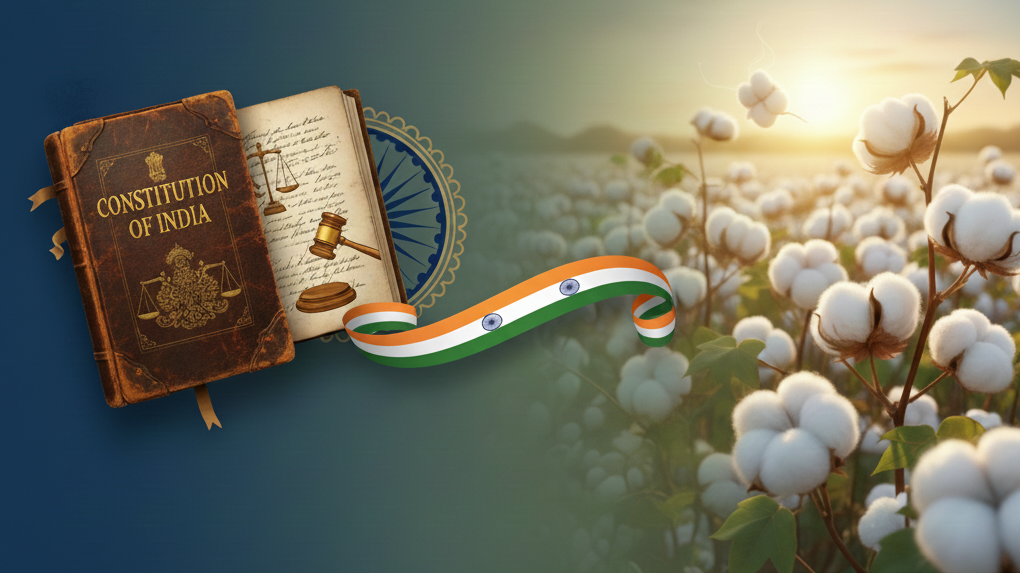
Every year, Constitution Day on 26 November reminds India of the historic moment in 1949 when the Constitution was adopted, laying the legal foundation of the world’s largest democracy. While most discussions revolve around rights, freedoms and governance, there is an unexpected yet powerful connection between the Constitution and one of India’s most defining economic and cultural fibres: cotton. This link, often overlooked in mainstream narratives, highlights how deeply India’s constitutional evolution was tied to its textile and agricultural identity.
In the early years after independence, cotton was not merely an agricultural commodity. It was a lifeline that powered farms, mills, exports and employment across the nation. This is where Article 369 entered the picture. The original Constitution included Article 369, a temporary provision that granted Parliament special powers to legislate on key economic matters—specifically trade, commerce, production, supply and distribution of essential goods such as raw cotton, cotton textiles and cotton seeds. Although these subjects typically fell under State control, the Parliament was given authority for a limited period to ensure stability during the fragile post-independence transition.
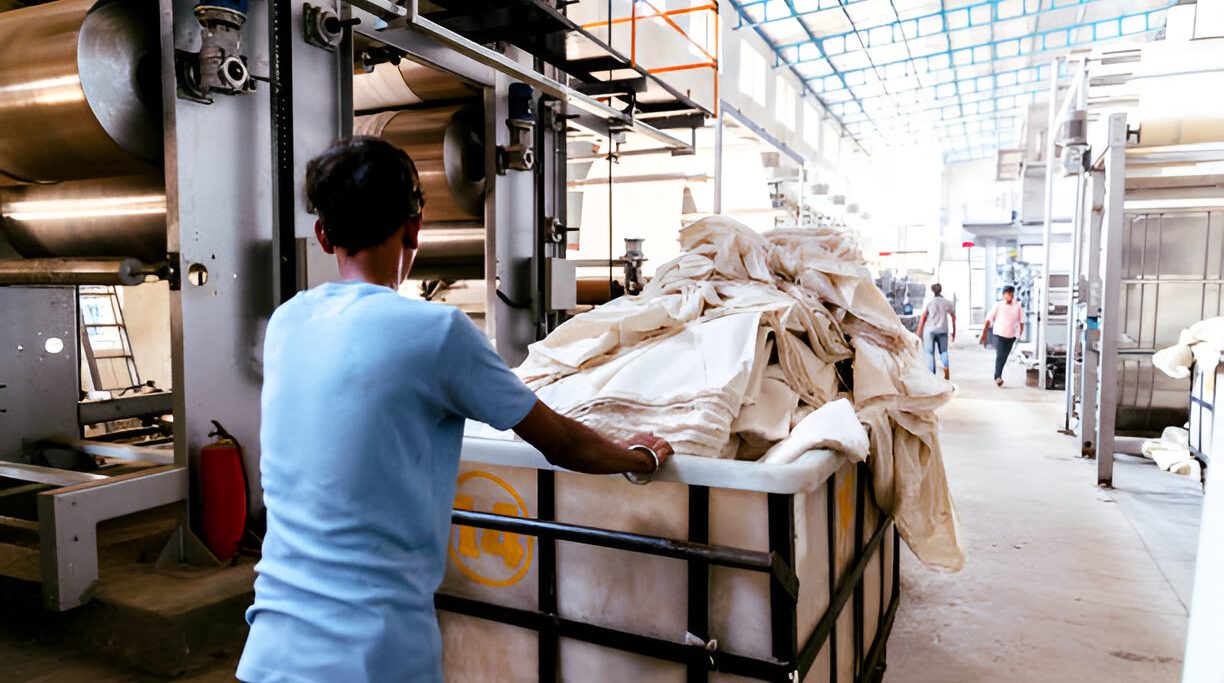
This provision reflected a crucial reality. Cotton was the backbone of India’s textile economy, supporting millions of farmers, weavers and factory workers. The framers of the Constitution recognised that any disruption in cotton supply or distribution could impact not just industry, but livelihoods, exports and national growth. Article 369 served as a transitional safeguard, allowing the central government to regulate cotton and other commodities effectively during a time marked by partition-related upheavals, food shortages and economic restructuring. It ensured that cotton remained available, affordable and efficiently distributed at a time when the nation was rebuilding its economy.
Constitution Day therefore becomes more than a celebration of legal ideals. It reminds us that the Constitution was never meant to exist only in courtrooms or classrooms. It was crafted to influence real, everyday life—from cotton fields to textile mills, from farmers harvesting crops to workers stitching garments. Cotton’s presence in the early constitutional framework symbolised the commitment to economic justice and social stability, ensuring that essential industries were protected so that democracy had a solid foundation from which to grow.
Even though Article 369 was temporary and eventually expired, its impact remains part of India’s economic legacy. Legislative powers over cotton returned to the States, but the early emphasis on cotton regulation demonstrated how vital the fibre was to India’s identity. Cotton helped fuel industrialisation, shaped export markets and became a global ambassador of India’s textile heritage. Today, as India remains one of the world’s largest cotton producers and a leading textile exporter, the importance of cotton continues to echo through the nation’s economic narrative.
On this Constitution Day, as we honour the values of justice, equality, liberty and fraternity, it is meaningful to recognise how much of India’s progress began with securing basic economic stability. The Constitution was woven not just with legal principles, but with the realities of agriculture, industry and livelihood. Cotton, one of India’s most enduring fibres, played a silent yet significant role in shaping those early policies.
The story of cotton and Article 369 reminds us that democracy is strongest when the people who power the economy—farmers, workers, traders and manufacturers—are supported and protected. The Constitution was crafted for them as much as for policymakers. As we celebrate 26 November, we honour not just a legal document but a living framework that understood the heartbeat of the nation, rooted in its soil, its fields and its industries. In many ways, the Constitution was woven with the same strength, resilience and relevance that cotton has carried for centuries.
Here’s to a Constitution built on reality and a fibre that helped clothe a nation—Cotton.