
As the January chill begins to fade and the morning mist lifts to reveal the fluttering Indian Tricolour, there is a quiet rhythm in the air. It is Republic Day. While most eyes are fixed on the grand parades of Rajpath and fighter jets carving through the sky, those of us immersed in textiles and fabric manufacturing see something deeper.
We see the fabric—specifically, cotton.
At first glance, connecting the Indian Constitution with cotton fabric may seem poetic, even indulgent. But look closely, and the story of India is quite literally written in warp and weft. On the day we celebrate becoming a Republic, it is worth unraveling how cotton and Indian democracy have grown side by side.
Spinning the Wheel of Destiny: Cotton and Indian Independence
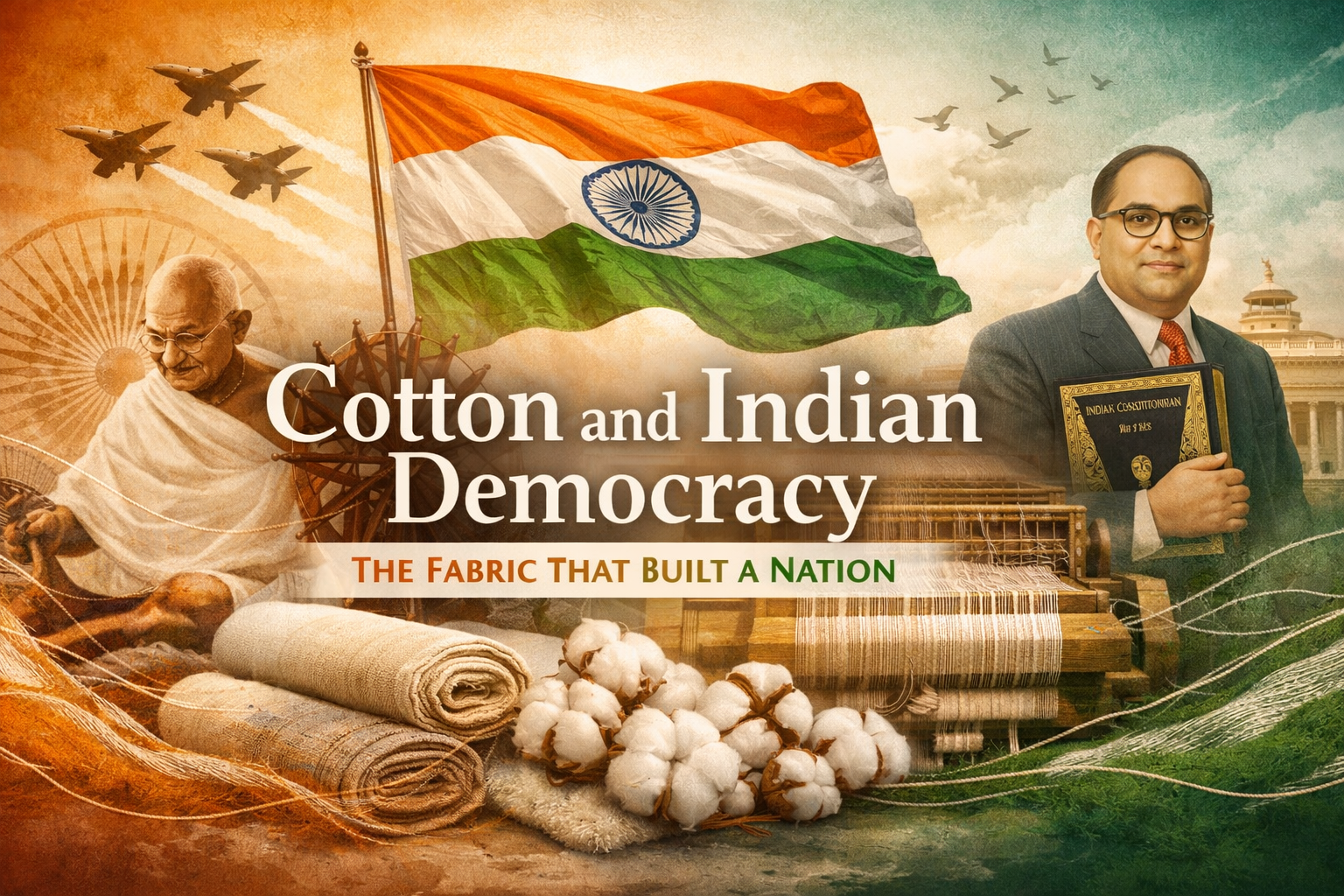
Long before the Constitution was drafted, India’s future was being shaped on a simple wooden wheel—the Charkha. More than a tool, it became a symbol of resistance, self-reliance, and dignity.
When Mahatma Gandhi championed Khadi cotton, he wasn’t promoting a fashion trend. He was advocating:
-
Economic independence
-
Decentralized manufacturing
-
Power in simplicity
This is why cotton remains the unofficial fabric of Indian independence.
India is now one of the largest cotton producers in the world, reflecting both its agrarian heritage and industrial strength. Much like raw cotton fibers—cleaned, carded, and spun to gain strength—India endured struggle, pressure, and reform to emerge as a sovereign democratic republic.
Cotton bends. Cotton breathes. But it rarely breaks.
Just like India.
The Indian Constitution: Democracy Woven on the Ultimate Loom
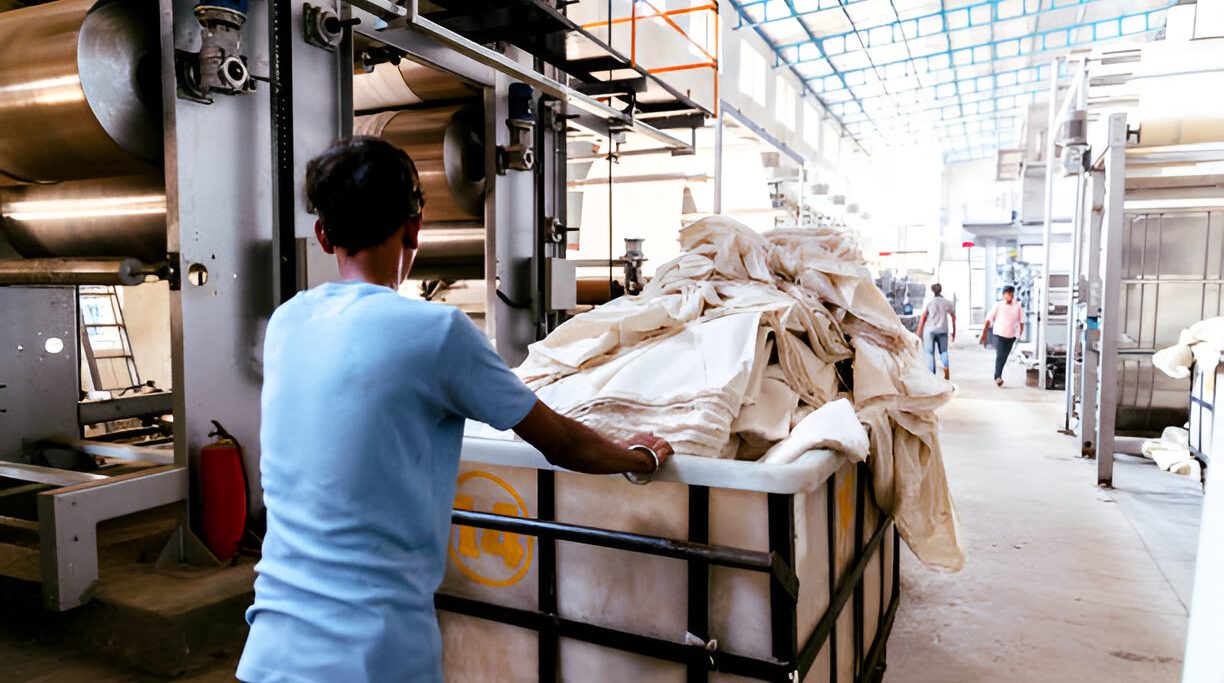
Anyone who has stood on a textile factory floor understands this truth:
A thousand looms sound chaotic—but they produce order.
On January 26, 1950, the Constitution of India came into force, acting as the ultimate loom for one of the world’s most diverse populations.
Dr. B.R. Ambedkar and the drafting committee were master weavers. They took threads of:
-
Multiple religions
-
Languages
-
Cultures
-
Castes and ideologies
—and wove them into a single, resilient fabric.
In textile engineering, the strength of fabric depends on the balance of warp and weft. In democracy, that balance is rights and duties. It’s complex, intricate, and requires constant care—but the result is a fabric that is vibrant, durable, and unmistakably Indian.
The Science Behind the Tricolour: Cotton, Chemistry, and Compliance
When we look at the Indian National Flag, we aren’t just seeing symbolism—we’re seeing textile science.
Historically, the Flag Code of India mandated that the Tricolour be made only from hand-spun and hand-woven khadi, using cotton, silk, or wool.
From a manufacturing perspective, this is brutal—and beautiful.
Achieving the precise Kesari (saffron) shade requires:
-
Accurate dye chemistry
-
Controlled temperatures
-
High color fastness
The fabric must endure:
-
Harsh sunlight
-
Monsoon rains
-
High-velocity winds
The Bureau of Indian Standards (BIS) specifies everything—from thread count to fiber composition—reminding us that freedom is engineered, not accidental.
Just like democracy, the flag survives because standards are upheld.
Cotton as Identity: Wearing the Republic on Your Sleeve
As India advances into a modern, global economy, cotton remains deeply relevant. In a world flooded with synthetic fabrics and fast fashion, there is a renewed appreciation for:
-
Organic cotton
-
Breathable natural fabrics
-
Sustainable textile manufacturing
From Bagh block prints to Pochampally Ikat, indigenous cotton textiles are reclaiming their place—not as nostalgia, but as modern Indian identity.
This Republic Day, when you wear a crisp cotton kurta or pin a small Tricolour to your chest, pause for a moment.
Feel the fabric. It is Cool, Breathable & Strong.
It carries history, labor, resilience, and freedom.
India doesn’t just manufacture textiles.
It manufactures identity—one cotton thread at a time.
Happy Republic Day 🇮🇳