
When building a high-end apparel line, fabric selection is everything. While standard jersey is the default choice for budget-conscious fast fashion, premium streetwear, luxury loungewear, and high-performance athleisure require a textile with more substance, structure, and durability.
If you have ever held a luxury t-shirt or a high-end hoodie and noticed it felt exceptionally smooth, heavy, and structured on both sides, you were likely holding Interlock Fabric.
Here is a comprehensive breakdown of what interlock fabric is, how it is made, and why it might be the missing piece for your next apparel collection.
The Science of the Double Knit: How Interlock is Made
To understand interlock fabric, you first need to look at how standard t-shirt fabric—single jersey—is constructed. Single jersey is made using one set of needles, creating a fabric with a distinct “right” side (smooth V-shaped knit stitches) and a “wrong” side (rougher loop-like purl stitches).
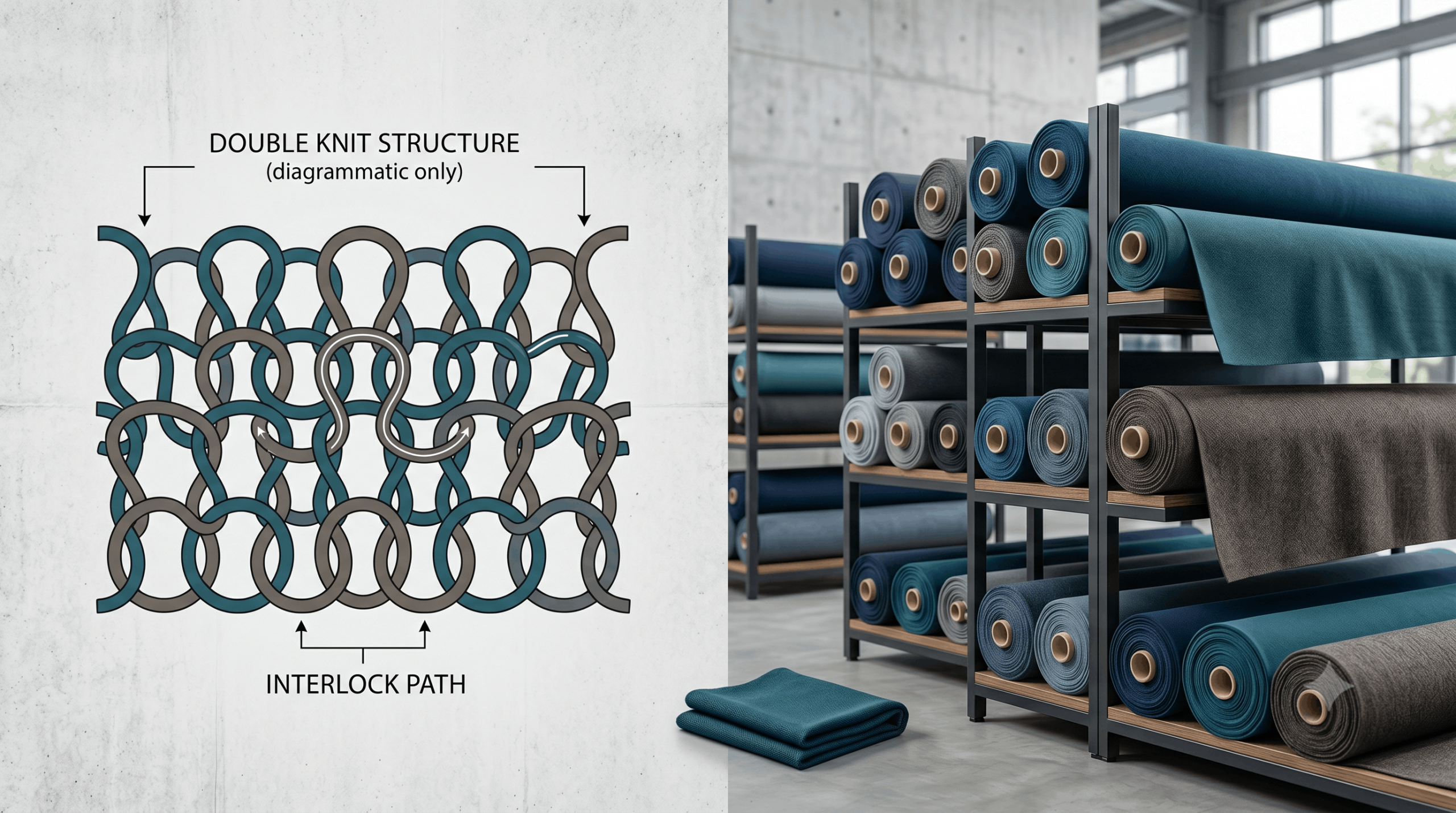
Interlock fabric is a type of double-knit textile. It is manufactured on a specialized circular knitting machine equipped with two sets of needles positioned directly opposite each other.
During the knitting process, two separate rib-knit structures are effectively knitted together simultaneously, interlocking the loops. The result is a compound fabric where the front and the back look completely identical. There is no “wrong” side to interlock fabric; both faces are perfectly smooth, uniform, and premium to the touch.
Key Properties: Why Interlock Outperforms Single Jersey
Because of its unique interlocking knit structure, this fabric possesses several distinct physical advantages that instantly elevate the quality of a garment.
1. Exceptional Structural Stability
Unlike single jersey, which has a natural tendency to curl at the edges when cut, interlock fabric lies completely flat. This dimensional stability makes it much easier to cut and sew accurately during factory production, resulting in cleaner seams and better-fitting garments.
2. Natural Multi-Way Stretch and Recovery
Interlock fabric has excellent inherent elasticity, particularly across the width. Because it achieves this stretch through the mechanics of its knit structure rather than relying solely on elastane (Spandex) synthetic fibers, it offers fantastic drape and snaps back to its original shape without bagging out over time.
3. High Density and Opacity
Because it is a double-knit construction, interlock is naturally thicker, heavier, and more compact than single jersey of the same yarn count. This means an interlock garment is completely opaque—eliminating the “see-through” issue common with cheap white or pastel-colored t-shirts.
4. Superior Smoothness for Printing and Dyeing
The surface of interlock is incredibly tight and uniform. This lack of texture provides an ideal canvas for high-definition screen printing, direct-to-garment (DTG) graphics, and complex dye techniques like double dyeing. The ink sits cleanly on top of the fabric rather than sinking into uneven gaps.
When Should Your Brand Choose Interlock Fabric?
While interlock is a premium option that carries a slightly higher production cost than basic knits, it is the definitive choice for specific apparel categories:
Heavyweight Streetwear: Ideal for boxy, oversized tees (240+ GSM) that need to hold a structured silhouette rather than draping loosely.
Premium Activewear & Athleisure: Excellent for performance tops, unlined yoga pullovers, and luxury tracksuits that require a smooth feel against the skin and maximum opacity during movement.
Luxury Infant & Kids Wear: Because of its buttery-smooth texture on both sides, 100% cotton interlock is a staple for high-end baby rompers, minimizing friction against sensitive skin.
At Cotton Monk, we believe that understanding the structural engineering of a textile is the secret to building an unforgettable brand. We don’t just supply fabric; we help founders match their design vision with the precise knit structure required to achieve it.
If your collection demands a substantial weight, an ultra-smooth hand-feel, and a silhouette that commands attention on a retail rack, our team can help you source, dye, and construct garments using the finest combed cotton and blended interlock fabrics available.