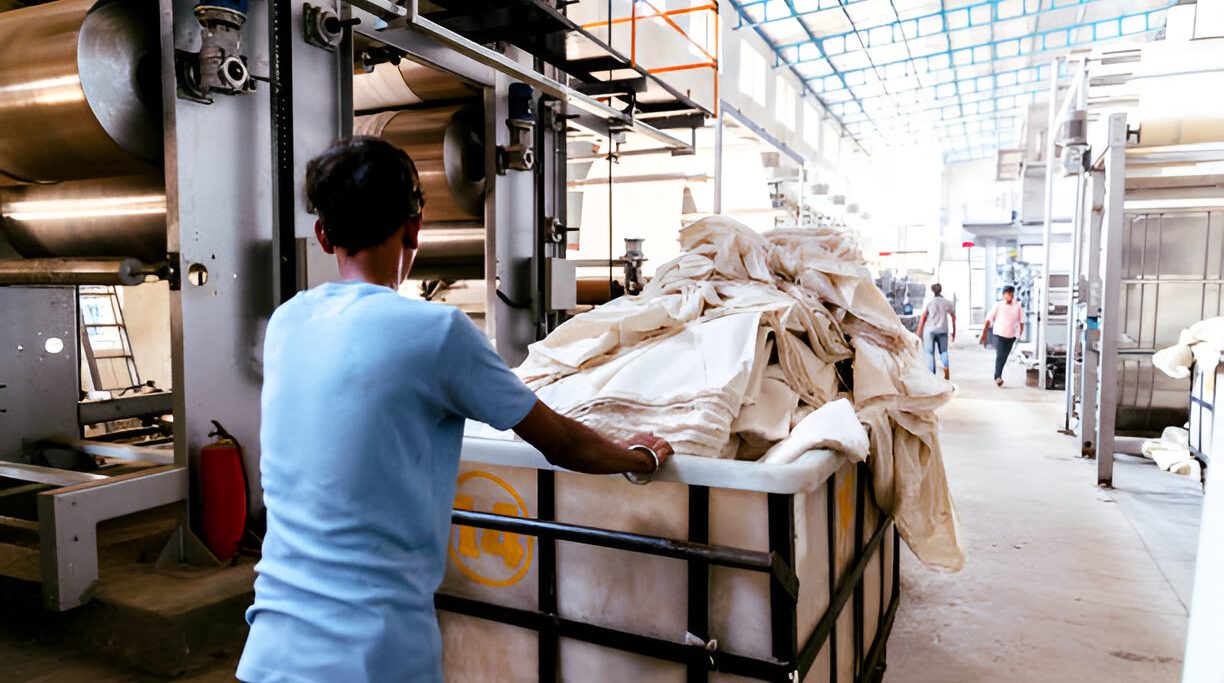

The global apparel supply chain is currently facing a massive trial by fire. As regional conflicts put immense pressure on global shipping routes, energy grids, and raw material access, fashion brands worldwide are desperately scrambling to de-risk their production pipelines. In a swift, strategic play to mitigate economic side-effects and lock down global market confidence, the Indian government has moved to completely eliminate major tax frictions on foreign investments. While the initial financial headlines focus on capital markets, the structural ripple effect this creates for the textile, garment, and fashion manufacturing industries is absolutely monumental.
Historically, global fashion conglomerates and private equity firms were deeply hesitant to invest directly in Indian manufacturing infrastructure due to complex tax litigations and shifting regulatory hoops. By systematically dropping these financial barriers, India is sending a clear message to international boardrooms that when the rest of the world faces geopolitical volatility, India offers financial and operational stability. This move removes the traditional friction for major Western retail brands looking to set up dedicated procurement frameworks, long-term asset bases, or direct equity partnerships on Indian soil. It transforms the nation from a standard transactional vendor country into the ultimate anchor destination for global retail risk management.
Furthermore, this tax cancellation unlocks massive institutional capital for advanced textile infrastructure. Foreign capital can now seamlessly flow into heavy domestic setups without the fear of restrictive tax penalties. This policy shift directly accelerates the scale-up of mega processing hubs and integrated textile parks across the country. It also fosters mill-level vertical integration, allowing foreign investors to directly back spinning mills and high-capacity processing facilities. By tightening the gap between farm-level raw materials and final apparel production, India is enabling a highly efficient, closed-loop domestic supply chain that few countries can match.
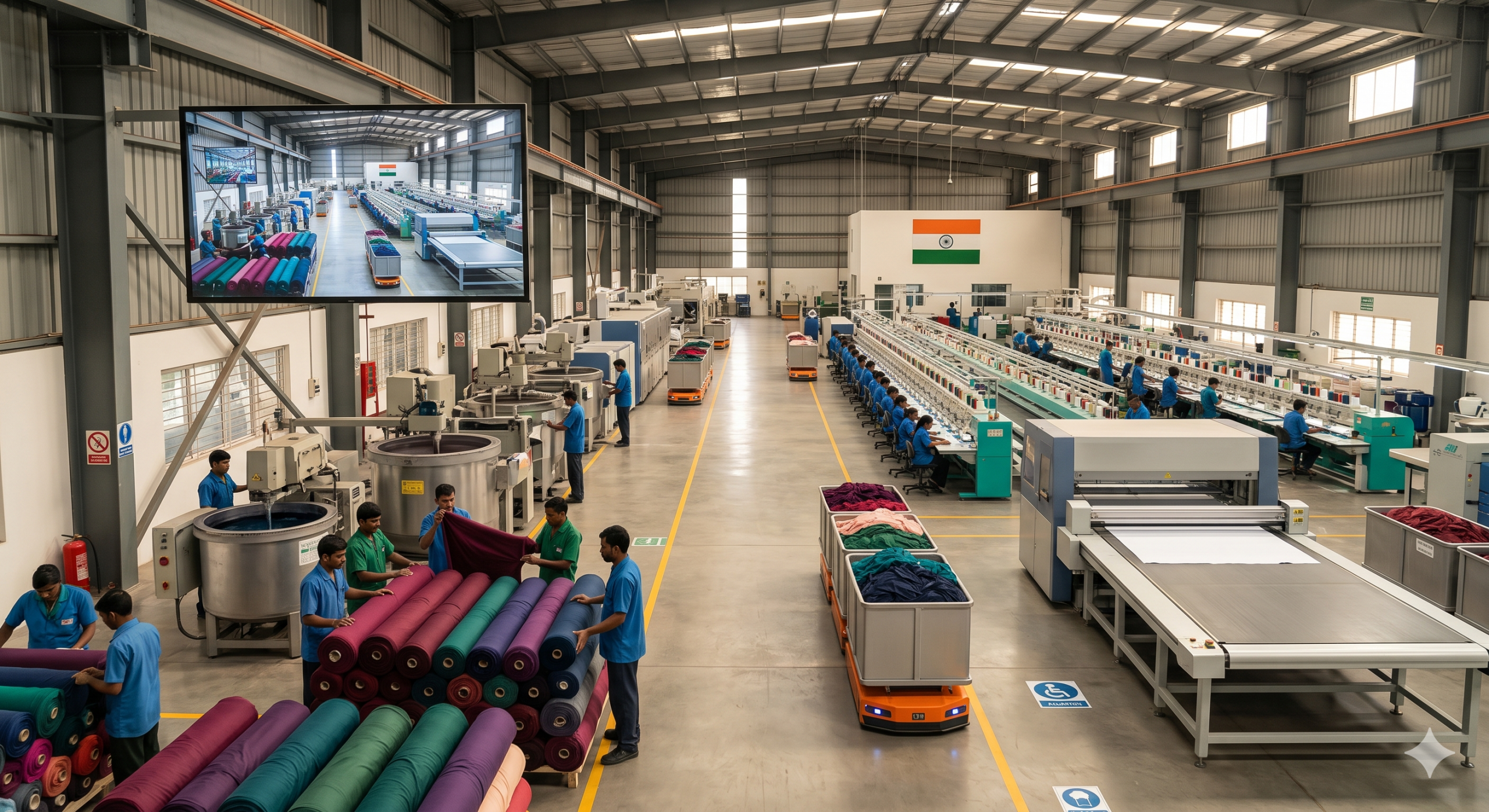
To outpace traditional regional competitors, the Indian garment sector has also been in a race to heavily digitize and automate. Advanced automation—such as AI-driven pattern cutters, automated sewing lines, and real-time inventory tracking systems—requires intense, upfront capital injection. By opening the floodgates to friction-free foreign investment, localized factories gain unprecedented access to global technology partnerships. This allows the domestic garment industry to upgrade its manufacturing capabilities overnight, drastically reducing lead times and eliminating human error margins for high-volume international orders.
Ultimately, the elimination of investment tax barriers makes it incredibly lucrative for global apparel brands to shift their core booking pipelines away from high-vulnerability trade zones. Western brands looking to diversify out of highly volatile trade corridors now have a massive financial incentive to anchor their production pipelines right here. The Indian government’s policy move isn’t just about financial markets—it’s a masterstroke in global supply chain engineering, positioning the country’s manufacturing sector to absorb global demand when brands value predictability over everything else.
The Cotton Monk Perspective
At Cotton Monk, we view this policy shift not just as an industrial upgrade, but as validation of the exact model we have been building. True supply chain resilience requires a seamless bridge between global brand demands and stable, tech-forward manufacturing on the ground. By combining world-class infrastructure with absolute financial transparency and flexibility, we ensure that global apparel brands can seamlessly leverage India’s newly optimized manufacturing landscape. As the industry shifts toward a safer, tax-friendly, and highly automated future, our facility remains ready to help forward-thinking fashion brands anchor their growth on stable ground.