
What is rPET?
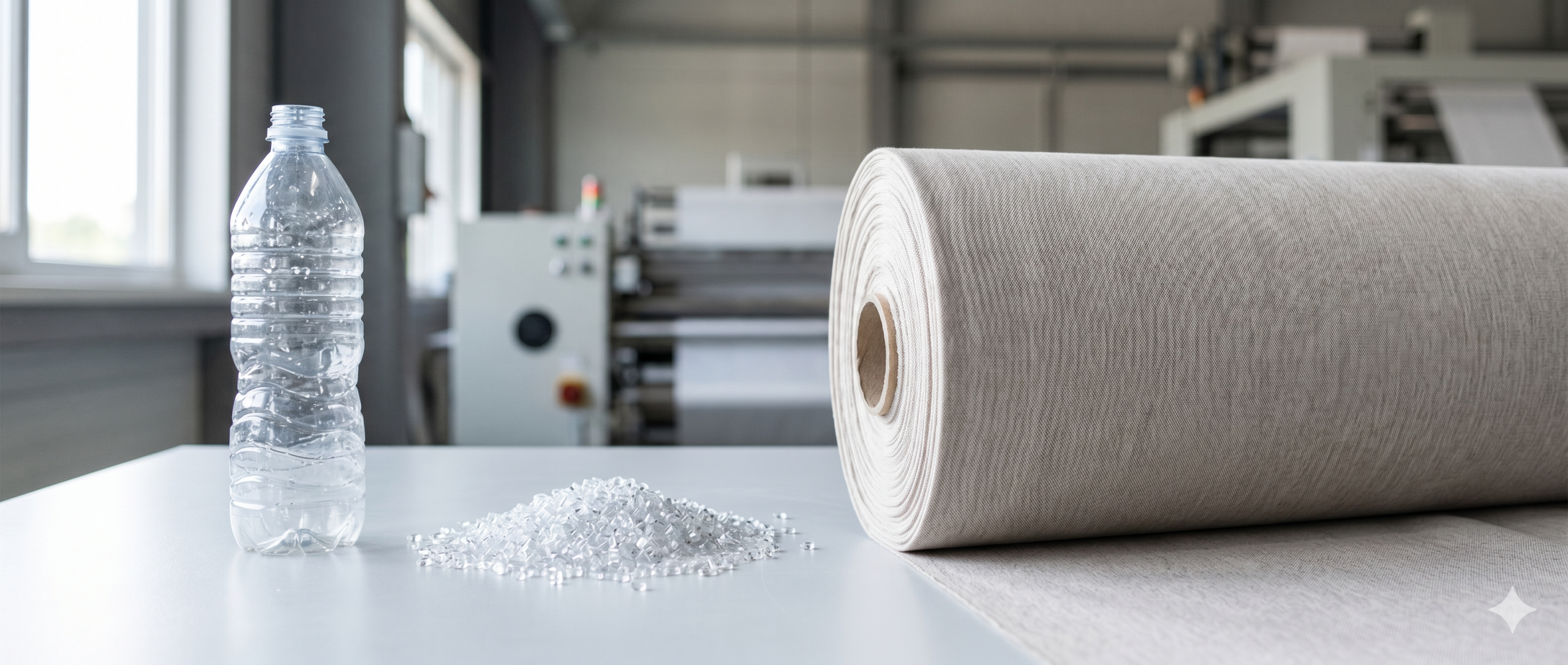
Simply put, rPET stands for Recycled Polyethylene Terephthalate. It is an eco-friendly material created by taking post-consumer plastic waste—most commonly, clear plastic water bottles—and transforming it into a durable, versatile, and high-performance textile yarn. Instead of extracting new fossil fuels to create virgin polyester, rPET gives a second life to plastics that would otherwise end up in landfills or oceans.
Walk into any modern apparel store today, and you will see the same phrase printed on tags everywhere: “Made with Recycled Polyester.” As global fashion pivots toward sustainability, rPET has become the undisputed champion of eco-friendly fabrics, turning waste into high-performance activewear, cozy fleeces, and everyday basics.
But how does a rigid plastic water bottle actually become a soft, breathable t-shirt?
Most guides give you the glossy marketing version. Today, we are opening the factory doors to give you the manufacturer’s perspective. Here is the step-by-step, mechanical reality of how recycled polyester is made.
The 5-Step rPET Manufacturing Process
Transforming post-consumer waste into premium yarn requires a blend of heavy-duty mechanics and precise thermal engineering. Here is exactly how it happens on the factory floor.
Step 1: Collection, Sorting, and Baling
The journey of rPET doesn’t start in a textile mill; it starts at a recycling facility. We source post-consumer PET bottles in massive bales.
From a manufacturer’s standpoint, sorting is the most critical phase.
Clear bottles are separated from colored ones (clear plastic yields white yarn, which can be dyed any color, making it the most valuable).
Caps and labels—which are made of different types of plastics like PP or PVC—must be strictly removed. Just one rogue piece of PVC in a batch of PET can ruin the chemical integrity of thousands of pounds of yarn.
Step 2: Shredding and Washing (Making “Flakes”)
Once sorted, the bottles are fed into massive industrial shredders. These machines chop the rigid plastic down into small, uniform pieces called PET flakes.
These flakes are then put through a rigorous, multi-stage hot washing process. We have to remove every microscopic trace of glue, soda residue, or dirt. If the flakes aren’t clinically clean, the final yarn will be weak or inconsistent in color.
Step 3: Melting and Extrusion (Making “Chips”)
This is where the magic of thermal processing begins. The clean PET flakes are dried and fed into an extruder.
The extruder heats the flakes to roughly 260°C to 280°C, turning the solid plastic into a thick, viscous liquid.
This liquid is forced through a die to create long, continuous spaghetti-like strands of liquid plastic.
These strands are immediately cooled in a water bath and chopped into tiny, uniform pellets known as rPET chips.
Step 4: Spinning the Yarn
Now, the material finally enters the textile phase. The rPET chips are heated once again until they melt into a honey-like consistency.
This molten plastic is forced through a spinneret—a metal plate with microscopic holes, much like a high-tech showerhead. As the liquid plastic pushes through these tiny holes, it emerges as ultra-fine, continuous filaments. When these filaments hit the air, they cool and solidify instantly into yarn.
Step 5: Drawing and Texturizing
Freshly spun rPET yarn is smooth and somewhat rigid—not something you’d want to wear. To make it feel like clothing, the yarn must be “drawn” (stretched) to align the polymers and increase its tensile strength.
Finally, it goes through a texturizing process. By crimping and twisting the yarn using heat, we introduce tiny air pockets. This gives the recycled polyester the soft, breathable, and voluminous feel that brands and consumers demand.
The Manufacturer’s Reality: Virgin vs. Recycled Polyester
Why is the industry pushing so hard for rPET? From a production standpoint, the environmental math is undeniable.
| Metric | Virgin Polyester | Recycled Polyester (rPET) |
| Raw Material | Petroleum (Fossil Fuels) | Post-consumer PET bottles |
| Energy Consumption | Very High | Up to 50% less energy used |
| Greenhouse Gas Emissions | High baseline | Up to 30% fewer carbon emissions |
| Water Usage | High | Significantly reduced (varies by facility) |
The Challenges of Manufacturing rPET
While recycled polyester is a massive step forward, it isn’t without its hurdles on the production line:
Supply Chain Consistency: The quality of the final yarn is entirely dependent on the quality of the recycled bottles. Poorly sorted bales lead to high defect rates.
Color Matching: Because the base material comes from used plastics, rPET chips can sometimes have a slight yellowish tint. Achieving a brilliant, pure white fabric requires advanced, eco-friendly bleaching techniques.
Cost: Processing post-consumer waste (sorting, washing, and melting flakes) is historically more expensive than simply extracting virgin petroleum. However, as recycling infrastructure improves globally, this price gap is closing rapidly.
Why Your Brand Should Make the Switch
The transition to recycled polyester is no longer just a marketing gimmick; it is becoming an industry standard. For fashion brands, activewear lines, and corporate merchandise, using rPET offers a tangible way to reduce your carbon footprint without sacrificing performance. Recycled polyester offers the exact same moisture-wicking, durability, and stretch properties as virgin polyester.
The next time you pull on a recycled fleece or a sustainable activewear top, you aren’t just wearing fabric. You are wearing a masterpiece of modern recycling engineering.