
When the temperature rises, the margin for error in your apparel collection shrinks. For fashion brands, summer isn’t just a season; it’s a technical challenge. The goal is to create garments that offer thermal regulation, moisture management, and effortless style.
If you are a brand owner looking to source materials that keep your customers cool while maintaining a premium feel, this guide is your roadmap to the perfect summer textile selection.
1. Understanding the Technicals: GSM and Weave
Before looking at fibers, you must understand GSM (Grams per Square Meter). This is the metric that defines the weight of your fabric.
Ultra-Lightweight (Under 100 GSM): Ideal for sheer overlays, scarves, and delicate blouses (e.g., Voile, Chiffon).
Summer Standard (100–150 GSM): The “sweet spot” for summer t-shirts, dresses, and button-down shirts.
Light-Midweight (150–200 GSM): Best for summer trousers, shorts, or structured linen blazers.
The Weave Factor: A lightweight fabric with a tight weave (like high-thread-count poplin) might actually feel hotter than a heavier fabric with an open weave (like a loose-knit linen). For summer, always prioritize breathability over thinness.
2. Top Fibers to Source for Summer
At Cottonmonk, we specialize in natural fibers because they outperform synthetics in every “beat the heat” category.
A. Organic Cotton (The Versatile Foundation)
Cotton is a staple, but for summer, you should source Combed Cotton or Pima Cotton. These have longer fibers, allowing for a thinner, stronger yarn that feels cooler against the skin.
Sourcing Tip: Look for Poplin or Chambray weaves for a crisp, professional summer look.
B. Linen (The Luxury Cooler)
Linen can absorb up to 20% of its weight in moisture before feeling damp. It is the gold standard for “Resort Wear” collections.
Sourcing Tip: If you’re worried about linen’s tendency to wrinkle, source a Cotton-Linen blend to gain stability while keeping the flax-cool property.
C. Seersucker (The Functional Classic)
Seersucker isn’t a fiber; it’s a weave. The “puckered” texture is achieved by weaving some threads tighter than others. This creates space between the fabric and the skin, allowing for constant airflow.
3. The Sustainability Shift: Sourcing Eco-Friendly Summer Fabrics
Modern consumers are increasingly looking for “Climate-Positive” fashion. When sourcing for summer, consider these sustainable alternatives:
Hemp: Extremely similar to linen but requires less water to grow. It is naturally UV-resistant—a huge selling point for summer wear.
Tencel™/Lyocell: Made from wood pulp, this fabric is silkier than cotton and has 50% more moisture absorption, making it incredible for summer activewear or flowy dresses.
4. Common Sourcing Pitfalls (And How to Avoid Them)
Beware of “The Synthetic Trap”
Polyester is cheap and durable, but it is essentially plastic. It traps heat and odors. If your brand mission involves quality, avoid 100% synthetics for summer. If you must use them for stretch, ensure they are moisture-wicking blends.
Don’t Ignore “Opaqueness”
Lightweight fabrics can often be “see-through.” When sourcing, always request fabric headers and check them against a light source. If you’re designing white trousers, you may need to source a slightly higher GSM or a specific lining fabric.
5. Why Partner with a Sourcing Expert?
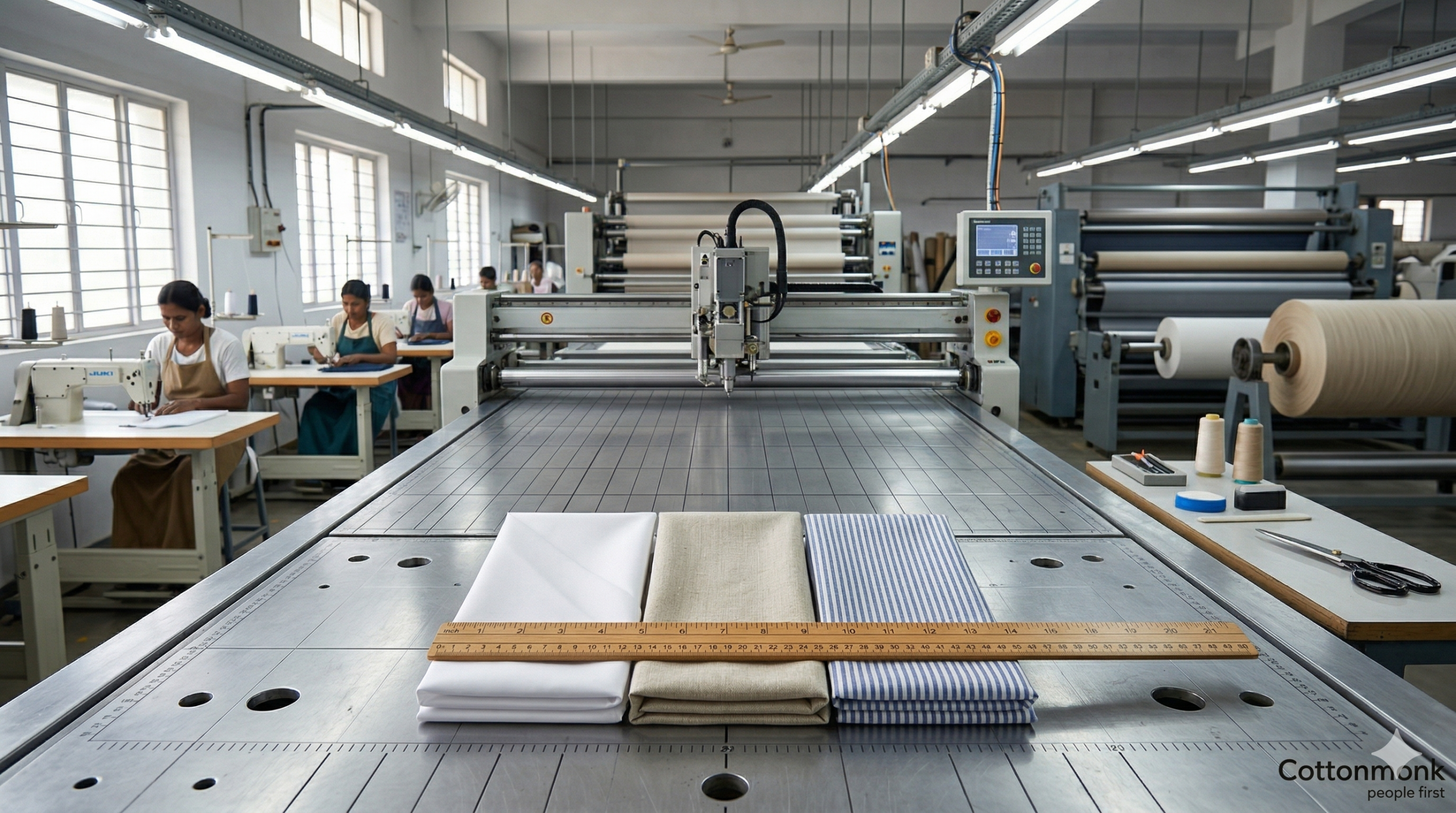
Sourcing the right fabric is 50% of the battle; the other 50% is how that fabric behaves during manufacturing. At Cottonmonk, we don’t just find the fabric; we test it.
Shrinkage Testing: We ensure your lightweight cotton won’t turn into a crop top after the first wash.
Color Fastness: Summer clothes face intense UV rays and frequent washing. We source dyes that stay vibrant.
Ethical Chain: We ensure every yard of fabric is sourced from mills that respect both the planet and the people.
Ready to Build Your Summer Collection?
Choosing the right material is the first step in building a brand that customers return to every season. Whether you are looking for the crispest poplins or the most breathable linens, the technical team at Cottonmonk is here to help you scale.